“The Capital City of India”
Delhi Tourism
The capital of India, Delhi is a cosmopolitan city with a historic old Delhi and the modern New Delhi. From historical monuments to crowded shopping malls, from an extensive network of the modern metro system to Delhi University campus, Dilli has multiple personalities and is considered to be the city with a heart.
The narrow, winding lanes and bylanes of old Delhi are a testament to the former Mughal rule. Old Delhi houses one of the country’s oldest and busiest market – Chandni Chowk.
Take time to explore historical monuments such as the Red Fort, Jama Masjid, Humayun’s Tomb and Purana Qila if you want to explore the Mughal History. Delhi has famous temples scattered all across the city, a few noteworthy ones being the Akshardham Temple, the Lotus Temple (also known as the Bahai Temple), and the ISKON Temple.
Places To Visit
India Gate

The All India War Memorial, popularly known as the India Gate, is located along the Rajpath in New Delhi. The imposing structure of India Gate is an awe-inspiring sight and is often compared to the Arch de Triomphe in France, the Gateway of India in Mumbai and the Arch of Constantine in Rome. This 42-meter tall historical structure was designed by Sir Edwin Lutyens and is one of the largest war memorials in the country. India Gate is also famous for hosting the Republic Day Parade every year.
Qutub Minar
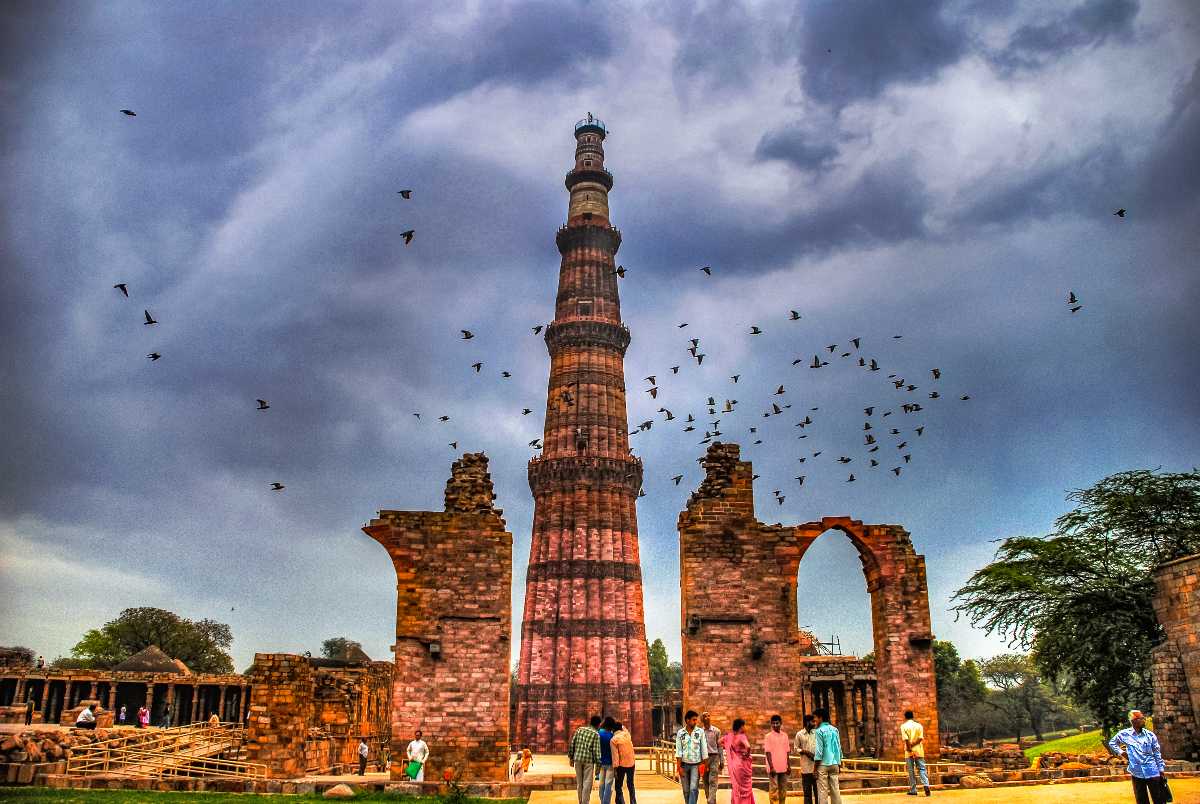
Qutub Minar is a minaret or a victory tower located in Qutub complex, a UNESCO World Heritage Site in Delhi’s Mehrauli area. With the height of 72.5 metres (238 ft), Qutub Minar is the second tallest monument of Delhi. Its construction was started in 1192 by Qutb Ud-Din-Aibak, founder of Delhi Sultanate after he defeated the last Hindu Ruler of Delhi. He constructed the basement, after which the construction was taken over by his son-in-law and successor Iltutmish who constructed three additional stories. The fourth and fifth storeys were built by Firoz Shah Tuglak.
Humayun’s Tomb
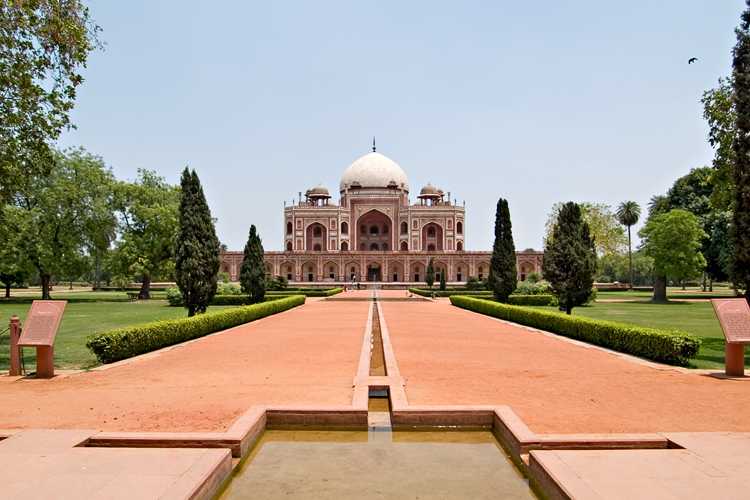
As the name suggests, Humayun’s tomb is the final resting place of the Mughal Emperor Humayun. Located in the Nizamuddin East area of Delhi, it is the first garden-tomb in the Indian subcontinent. This splendid piece of architecture was commissioned for construction by Humayun’s chief consort Empress Bega Begum in the year 1569-70 and is one of the very few structures that used red sandstone on such a massive scale at that time. The design of Humayun’s tomb is a typical Mughal architecture with Persian influences and was conceptualised by Persian architect Mirak Mirza Ghiyath. Owing to its magnificent design and illustrious history, Humayun’s Tomb was featured in UNESCO’s World Heritage List in the year 1993.